Cartesian robots move according to Cartesian coordinate geometry in one, two, or three dimensions. They travel along linear axes that intersect at the point of origin at 90 degree angles: the x-axis moves back and forth, the y-axis side to side, the z-axis up and down. Programming and control are straightforward, because the robot moves to a point in space defined by its coordinates along those axes, which is what lends the geometry to such a wide range of industrial work.
Cartesian and gantry
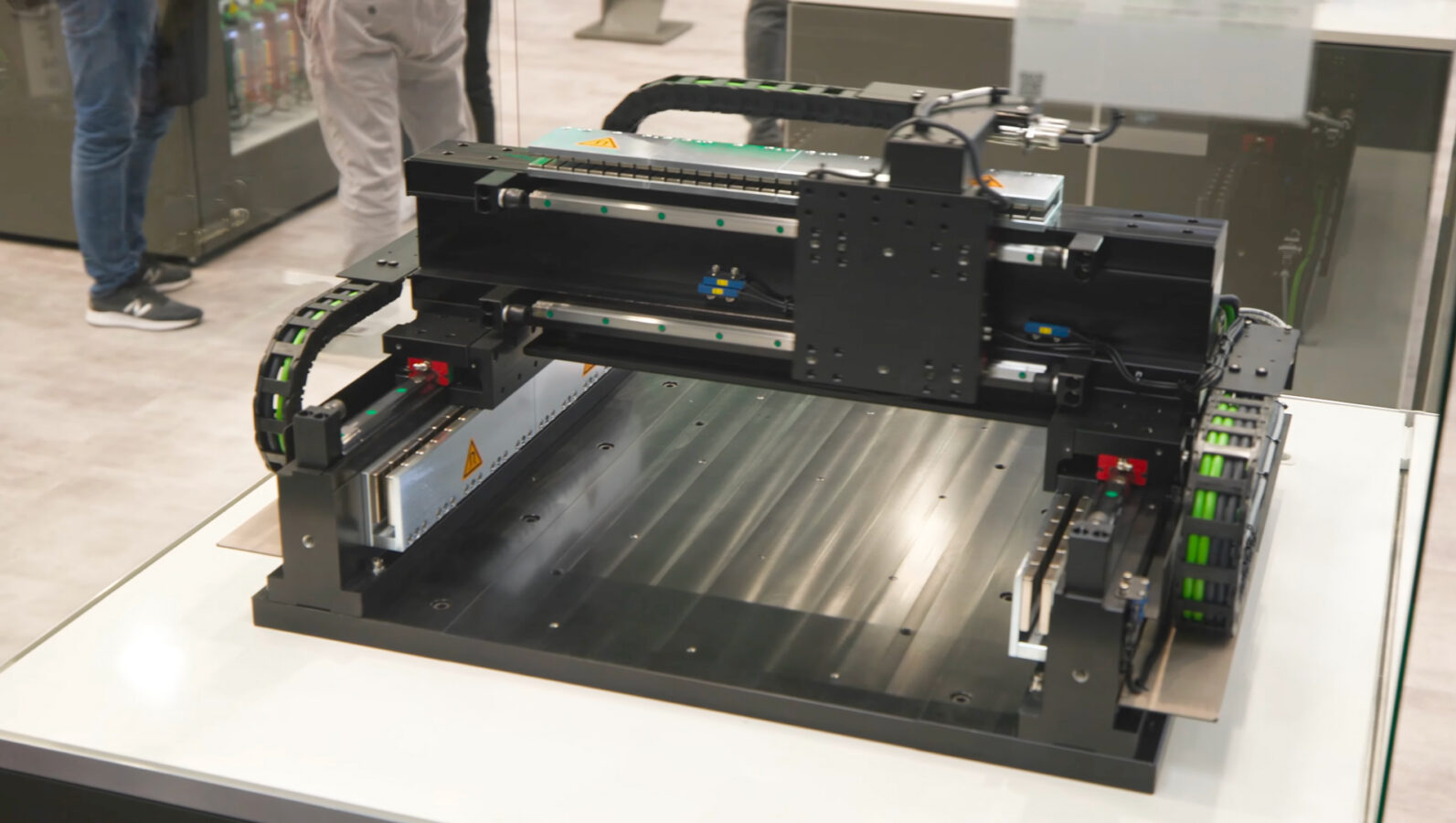
A Cartesian robot is stages attached in an x, y, and z configuration with joining brackets. On the controller’s instruction, the actuators slide linearly along each axis to the given coordinates. Some designs use one linear actuator per axis, with each axis supported on one end, cantilevered, by the axis below it. Offsetting the point of interest and the work area from the lower axis makes part removal easier, reduces the surrounding structure required, and lowers cost by consolidating axes.
A gantry robot is a Cartesian robot dual-driven by two x-axes that form its base, with the y-axis running between them as a single beam. Because the load is both supported and driven from two sides, load capacity rises and the stage can run longer with less deflection under static, inertial, and external loads.
What the geometry is good at
Cost efficiency, because the design is simple and built from standard components. Construction, because the robot is compact but scales to its application and works with nearly any linear actuator and drive mechanism. Movement, because three or more axes of almost any length give straight-line travel and rapid acceleration. Precision, because the tasks are highly repeatable. Versatility, because the arrangement is adaptable, customizable, and reconfigurable. Strength, because it carries light to heavy loads, hanging loads included, over longer distances. And stability, because it holds up against vibration and deflection.
Where they end up
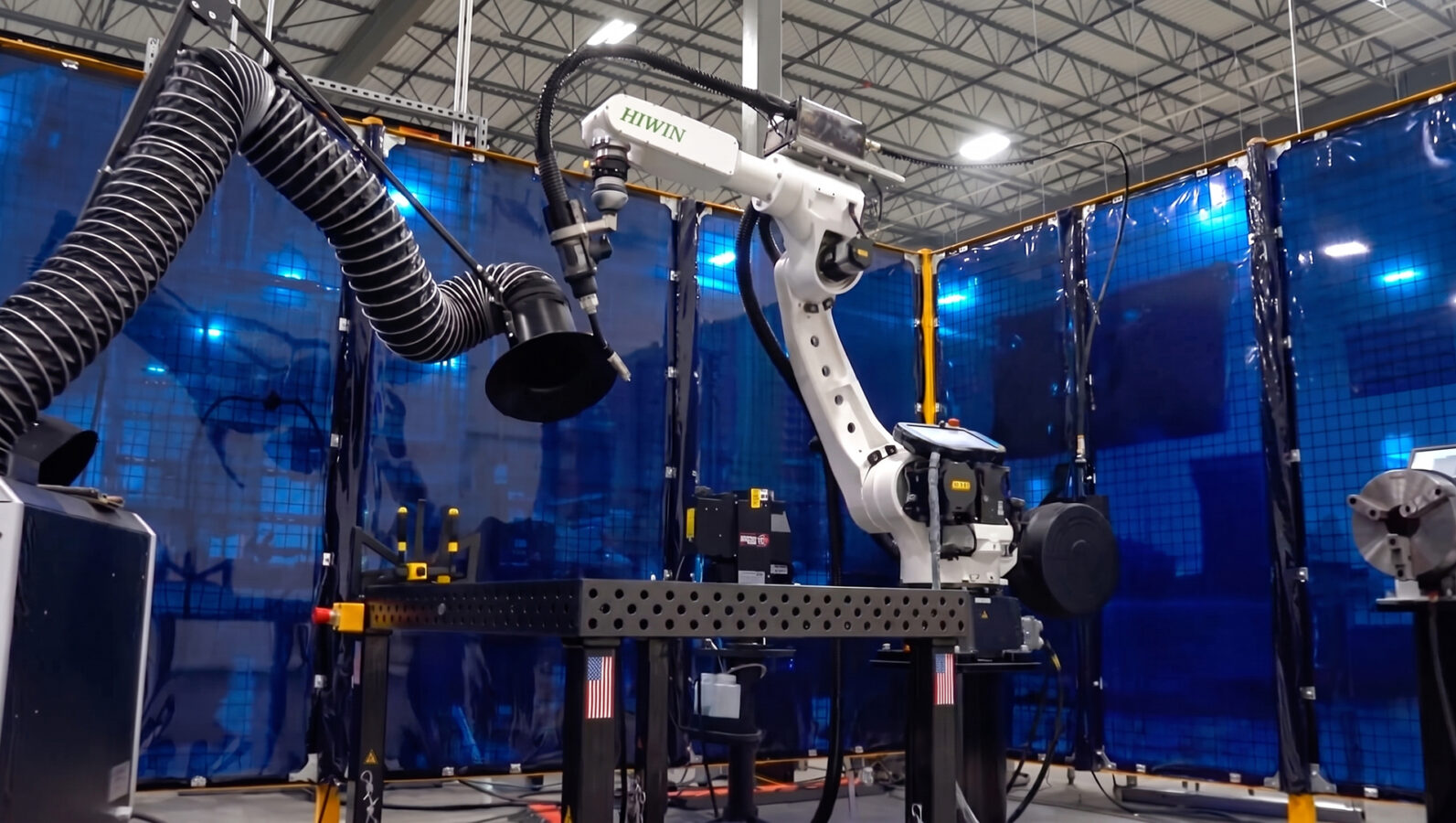
In manufacturing: assembly line transfer, CNC machining, component assembly, driving and fastening screws, precision welding, printing and plotting, inspection and testing, and waterjet or laser cutting.
In warehousing: camera positioning and scanning, cutting and scribing packaging, feeding and removing packaging on a line, lifts and elevators, palletizing and stacking, sorting, indexing and labeling, and unit loading and unloading.
In pharmaceutical and medical work: dispensing materials, filling containers, and processing lab samples. Beyond the efficiency, automating these tasks keeps people away from the ones that carry a safety risk.
Sizing one
Actuator selection depends on the application and its specifications: payload weight and offset, operating temperature, speed and acceleration, and stroke. Calculate not only the total load but the weight carried on each axis. Ignoring the weight of each axis strains the motor, and that is especially true of cantilevered designs where an axis is supported at one end only. A heavy load out at an unsupported edge shortens motor life. Keep the z-axis light, then work the remaining axes out carefully from there.