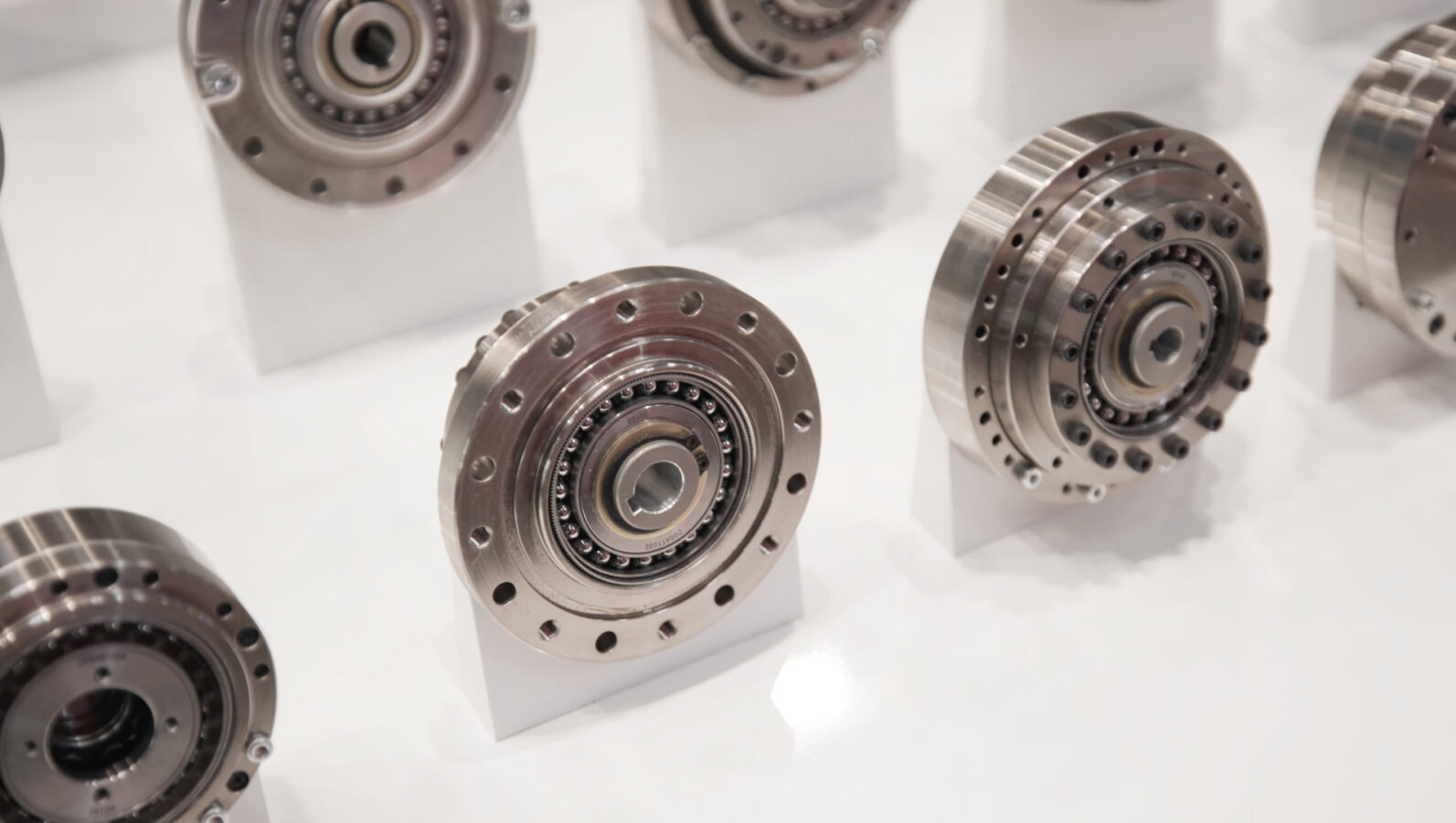
Bearing lubricant decreases the friction between bearing balls or rollers and the raceway. Left unmanaged, that friction generates heat and drives premature component failure, and the bill arrives as unplanned repairs and downtime. The right lubricant does four things at once: it minimizes friction, carries heat away from active parts, reduces wear and corrosion, and leaves a moisture-resistant barrier around the bearing.
Grease, or oil?
Grease is a semi-fluid to solid substance: a lubricant mixed with a thickening agent. The base is typically an ester, a mineral oil, or a silicone, thickened with an organic or inorganic soap. As the bearing turns and temperature climbs, the grease thins and flows. Its real advantage is coverage, because it lubricates through every stage of ball movement, and synthetic formulations hold up across temperature extremes.
Oil is the more adaptable of the two, applied by different methods depending on the volume, speed, and demands of the system. Against grease it dissipates heat more efficiently and supports higher speed ratings.
What each one is good at
Oil protects temperature-sensitive equipment best. It cools a hot system, handles cold starts, and lets you meter the volume precisely. Changing and cleaning it is straightforward, and oil-lubricated systems tend to be more energy efficient. The cost is containment: oil can leak, which carries environmental consequences, and food and beverage plants have to plan around contamination risk.
Grease is the answer where there is no continuous supply piping or distribution system to lubricate from. Leakage is unlikely and application is usually a one-time job, and it forms a stronger seal against grit, dirt, and other contaminants reaching the balls. It is more expensive, especially in high-temperature formulations, and removing and replacing it takes real labor. Aerospace and motor manufacturers accept that trade every day.
Four things to get right when you apply it
Cleaning: check that the new lubricant is compatible with whatever is already in there. If it is not, clean the system with a hydrocarbon solvent, following the manufacturer’s safety guidance.
Quantity: too much and too little both damage bearings. Work from tank capacity, system speed, the heat you need to carry away, and how well the assembly is sealed.
Bearing-free space: the space available inside the bearing sets the amount it can hold. Measure it before you apply anything.
Run-in: a run-in procedure prevents over-lubrication and the heat that comes with it. Remove the surplus, establish proper contact, and seal the system.
Choosing a HIWIN grease
HIWIN supplies greases for different duty profiles rather than one general-purpose tub: heavy load, clean room, low particle emission at high speed, and high speed. Each is offered in a 70 g cartridge, a 400 g pipe, and a 1 kg can, alongside the grease guns that apply them.